
Explore Our Services
At Adaptiv Health, we provide evidence-based rehabilitation for musculoskeletal injuries, neurological conditions, concussion, persisting pain, Complex Regional Pain Syndrome (CRPS), hypermobility disorders (hEDS/HSD), peripheral nerve conditions including GBS, CIDP and MMN, as well as chronic health and lifestyle conditions. Whether you're recovering from a muscle, tendon or ligament injury, living with a neurological or neuroimmune condition, returning to work or sport, or managing long-term symptoms, our focus is on helping you regain confidence, function and independence through personalised rehabilitation.
Our philosophy is built around Understand. Build. Change. We combine contemporary rehabilitation science, pain education, neuroplasticity, exercise physiology and our RECOSYSTEM model to understand the many factors that influence recovery.
Working with your GP, specialists and broader healthcare team, we aim to empower you with the knowledge, skills and support to help your body adapt, build capacity and achieve meaningful, long-term improvements in health, movement and quality of life.
Musculoskeletal Rehabilitation
How We Can Help
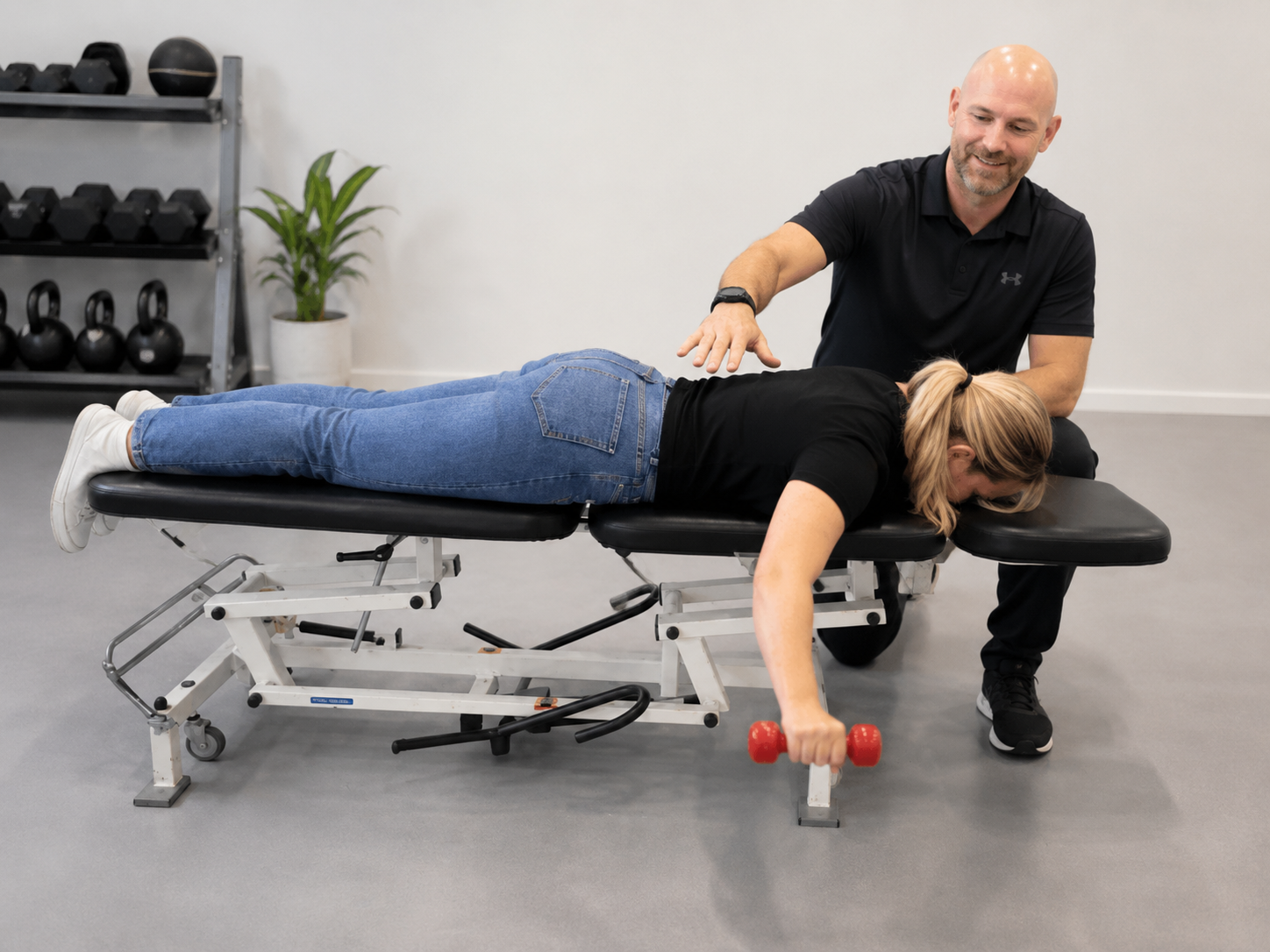
Musculoskeletal injuries can affect muscles, tendons, ligaments, joints, cartilage, and bone. Whether you're dealing with a muscle strain, tendon pain, ligament injury, joint dysfunction, post-surgical recovery, or a longstanding condition that simply hasn't improved as expected, successful rehabilitation requires more than just waiting for tissues to heal. The good news is that the body is remarkably adaptable. Muscles respond to progressive loading by becoming stronger and more efficient. Tendons can remodel and improve their load tolerance over time. Ligaments and connective tissues continue to adapt long after the initial healing process. Even the nervous system changes in response to movement, exercise, and rehabilitation, helping to restore confidence, coordination, and function. Recovery is not a passive process—it is an active biological process driven by the right stimulus at the right time. At Adaptiv Health, we combine contemporary rehabilitation science with over 25 years of clinical experience to help people recover from both acute and persistent musculoskeletal conditions. Our approach recognises that while tissue healing is important, factors such as movement patterns, strength, fear of re-injury, sleep, stress, physical conditioning, and overall health can all influence recovery. We take the time to understand the whole picture, not just the injured body part. Whether your goal is returning to work, sport, recreation, or simply moving through daily life with greater ease, rehabilitation is tailored to your individual needs. Through education, targeted exercise, progressive loading, and practical strategies, we help guide the body's natural adaptive processes while building confidence and capacity along the way. Conditions
We Commonly Help With:
Muscle strains and tears
Tendinopathy and tendon pain
Ligament sprains and instability
Joint injuries and osteoarthritis
Post-surgical rehabilitation
Shoulder, hip, knee, foot and ankle conditions
Back and neck pain
Work and sporting injuries
Post-operative rehabilitation
Persistent musculoskeletal pain
Our Philosophy
Understand what is happening. Build strength, movement, capacity, and confidence. Change the system through adaptation.
Because recovery is not just about repairing tissues. It's about creating the conditions that allow the body, and the person, to adapt, recover, and thrive.
Neurological Rehabilitation
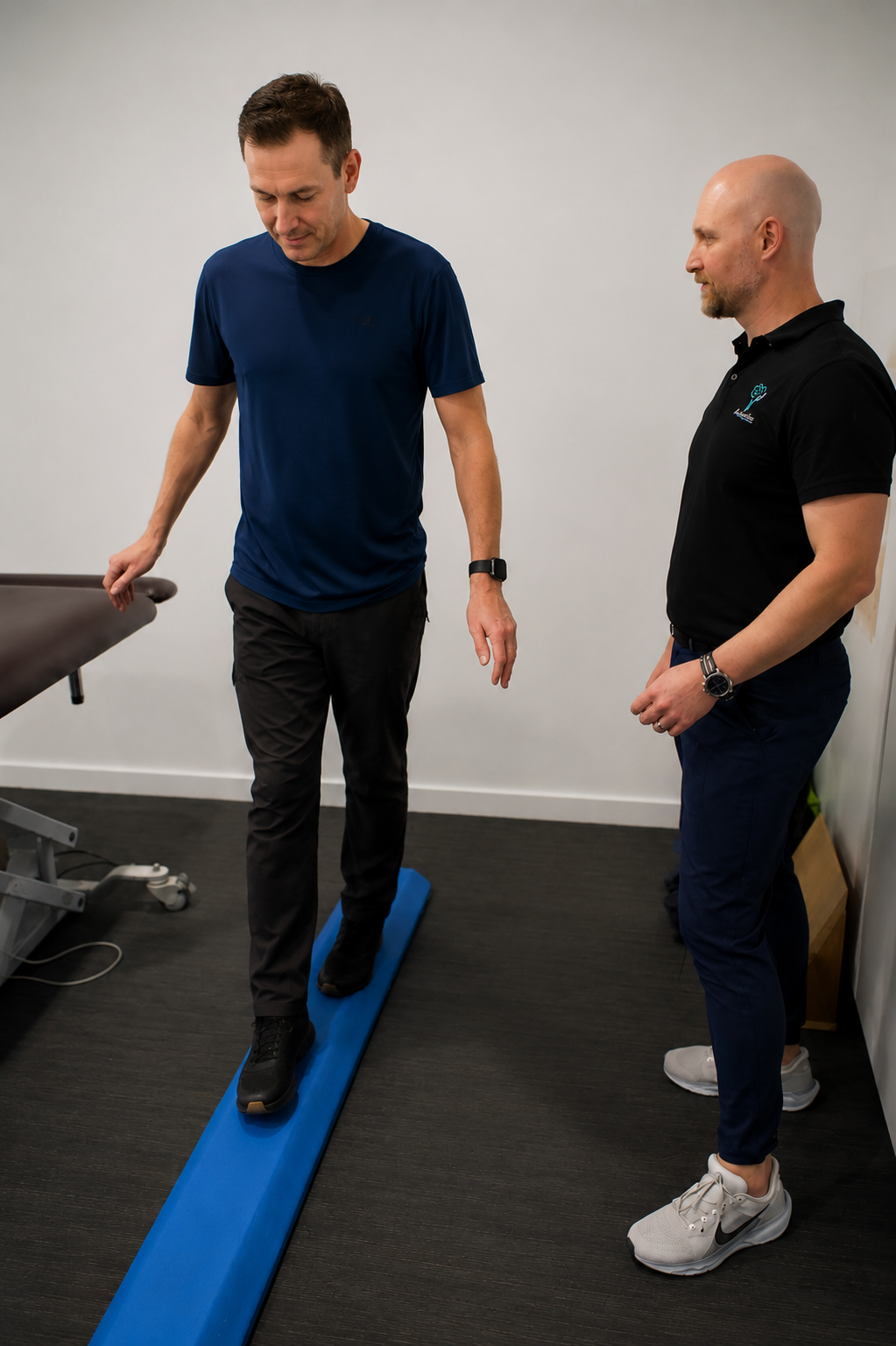
A neurological diagnosis can be life-changing. Whether it's a stroke, Parkinson's disease, multiple sclerosis, Functional Neurological Disorder (FND), acquired brain injury, peripheral nerve injury, or another neurological condition, the effects often extend far beyond movement alone.
Balance, coordination, strength, fatigue, confidence, cognition, pain, and participation in everyday life can all be impacted. The encouraging news is that the nervous system remains adaptable throughout life.
Through a process known as neuroplasticity, the brain and nervous system retain the ability to reorganise, strengthen existing pathways, develop new connections, and improve function in response to meaningful practice and experience. While every condition presents unique challenges, the science consistently shows that targeted, task-specific rehabilitation can drive positive change and improve quality of life.
At Adaptiv Health, our approach is built around understanding the individual rather than simply treating the diagnosis. We combine evidence-based exercise rehabilitation, motor learning principles, neuroplasticity, behavioural science, and education to help people maximise their function and independence.
Rehabilitation focuses on creating the right conditions for the nervous system to learn, adapt, and respond. For people recovering from stroke or brain injury, this may involve rebuilding movement patterns, balance, walking ability, strength, and confidence. For progressive neurological conditions such as Parkinson's disease or Multiple Sclerosis, the focus may be on maintaining function, slowing deconditioning, preserving independence, and enhancing quality of life. For those living with FND, rehabilitation aims to retrain movement and function through contemporary approaches that recognise the genuine changes occurring within nervous system processing rather than structural damage.
We understand that neurological rehabilitation is rarely a straight line. Progress often occurs through small, meaningful gains that build over time. Our role is to help identify those opportunities, provide a clear pathway forward, and support you through the process. Conditions
We Commonly Help With
Stroke rehabilitation
Parkinson's disease
Functional Neurological Disorder (FND)
Multiple Sclerosis (MS)
Acquired Brain Injury (ABI)
Traumatic Brain Injury (TBI)
Peripheral nerve injuries
Balance and gait disorders
Neurological weakness and deconditioning
Vestibular and movement disorders
The Science Behind Recovery
The nervous system changes in response to experience. Research demonstrates that repetition, intensity, task specificity, salience, and challenge can drive neuroplastic adaptations within the brain and nervous system. These changes may improve movement efficiency, coordination, strength, balance, and overall function. Importantly, recovery is influenced by more than the nervous system alone. Sleep, physical activity, cardiovascular fitness, stress, mood, confidence, social connection, and environment all contribute to outcomes.
We view these factors as part of a person's RECOSYSTEM; the recovery ecosystem that surrounds and shapes rehabilitation.
Our Philosophy
Understand the condition, the person, and the factors influencing recovery.
Build movement, confidence, capacity, and meaningful function.
Change through adaptation, learning, and neuroplasticity.
Because neurological rehabilitation is not about accepting limitations. It's about discovering what remains possible and creating the conditions for meaningful change.
Understand. Build. Change.
Because change is possible.
Persisting Pain / Chronic Pain Recovery
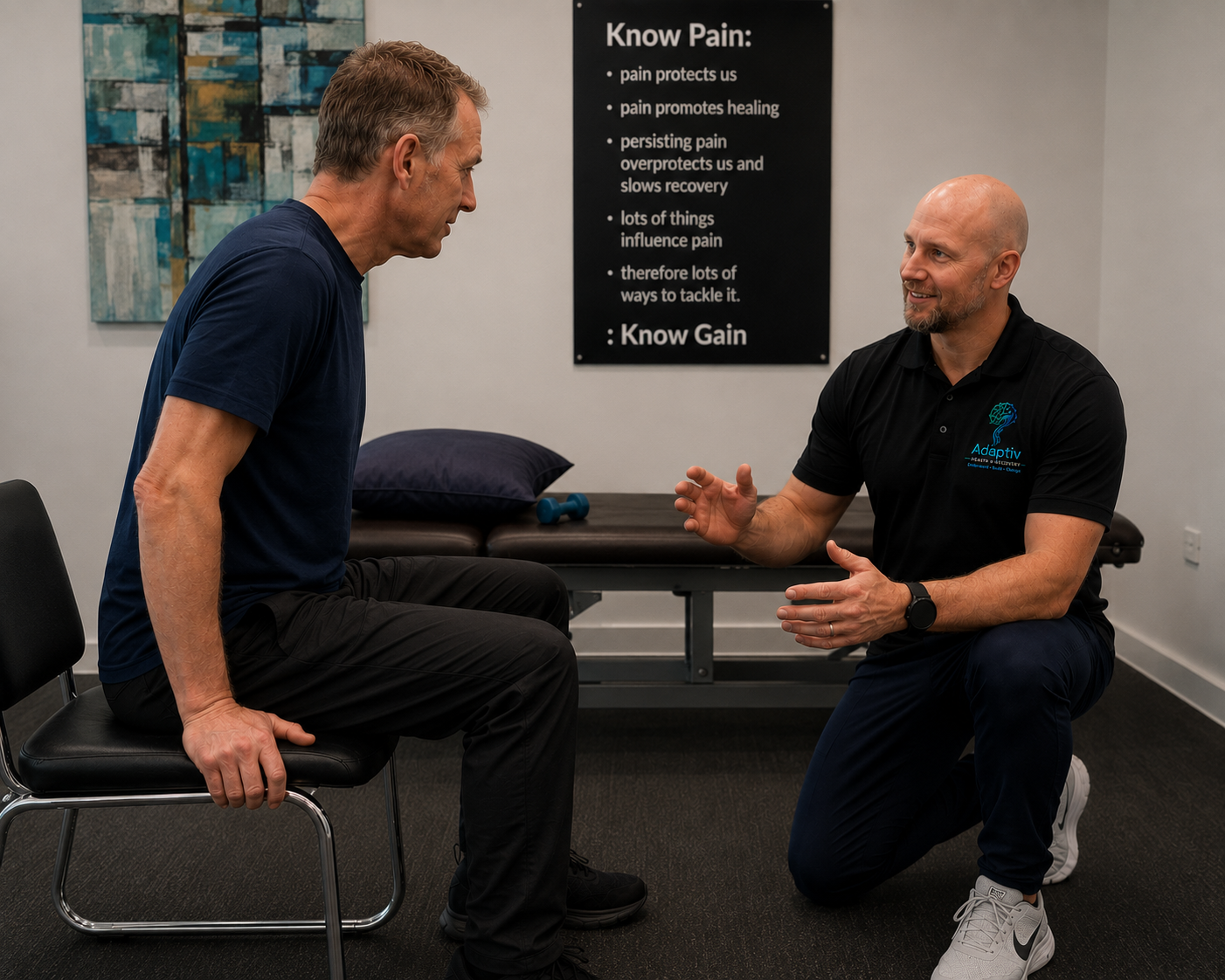
Persisting pain is one of the most misunderstood health conditions. For many people, the pain has lasted far longer than expected, treatments have provided only temporary relief, scans often fail to explain the severity of symptoms, and they are left wondering why recovery has stalled.
At Adaptiv Health, we understand that persistent pain is real, complex, and influenced by far more than tissues alone.
While pain may begin with an injury, surgery, illness, or other physical event, ongoing pain often reflects changes across multiple systems of the body. Research has shown that the nervous system, immune system, endocrine system, cardiovascular system, movement system, sleep, stress, emotions, beliefs, relationships, work, and life experiences can all influence how pain is experienced.
Pain is not simply a measure of tissue damage, as once thought, it is a protective response generated by the body based on the information it receives.
This is where our RECOSYSTEM (Recovery Ecosystem) approach differs.
Rather than asking, "What's wrong with the tissue?" we ask: "What does this person's recovery ecosystem look like?" Because recovery does not occur in isolation.
Every person exists within a RECOSYSTEM; a dynamic interaction between biology, psychology, movement, lifestyle, environment, healthcare, work, family, and community. When these systems become disrupted, recovery can become difficult. When they are supported, positive adaptation becomes possible.
Understanding the RECOSYSTEM Recovery is influenced by many interconnected factors:
The nervous system and pain sensitivity
Physical health and conditioning
Sleep quality and recovery
Stress and life demands
Mood, confidence, and self-efficacy
Work and occupational factors
Family and social support
Movement habits and activity levels
Healthcare experiences and beliefs
Meaning, purpose, and participation in life
No single factor explains persistent pain, but together they create the environment in which recovery either struggles or thrives.
The Science Behind Our Approach
Modern pain science demonstrates that the body remains adaptable throughout life.
Through processes such as neuroplasticity, immune adaptation, cardiovascular conditioning, behavioural learning, and graded exposure, the systems involved in pain can change over time. The goal is not to "push through" pain or convince someone that pain is imaginary. The goal is to create meaningful, evidence-based changes across the systems contributing to protection and sensitivity.
Research consistently supports approaches that combine:
Pain education
Exercise and movement rehabilitation
Gradual exposure to valued activities
Sleep and lifestyle optimisation
Stress management
Self-management skills
Social and occupational support
Recovery is rarely about finding a single damaged structure. More often, it involves helping the entire RECOSYSTEM become more resilient and adaptable.
What We Help With
Chronic low back pain
Persistent neck pain
Widespread pain
Fibromyalgia
Complex Regional Pain Syndrome (CRPS)
Persistent post-surgical pain
Chronic headaches and migraines
Persistent musculoskeletal pain
Pain-related disability and deconditioning
Complex presentations where previous treatments have failed
Our Philosophy
Understand why pain persists and the factors influencing your recovery.
Build confidence, capacity, movement, and resilience.
Change the RECOSYSTEM through adaptation, learning, and meaningful action.
Because persistent pain is not simply a problem of tissues.
It is a whole-person experience that requires a whole-system approach.
Understand. Build. Change.
Because recovery happens within a RECOSYSTEM.
Concussion Rehabilitation / Recovery
A concussion can be one of the most frustrating injuries to experience. For some people, symptoms resolve within days or weeks. For others, headaches, dizziness, fatigue, brain fog, light sensitivity, balance problems, exercise intolerance, sleep disruption, and difficulty concentrating can persist well beyond the expected recovery period.
At Adaptiv Health, we understand that concussion recovery is about much more than simply resting and waiting.
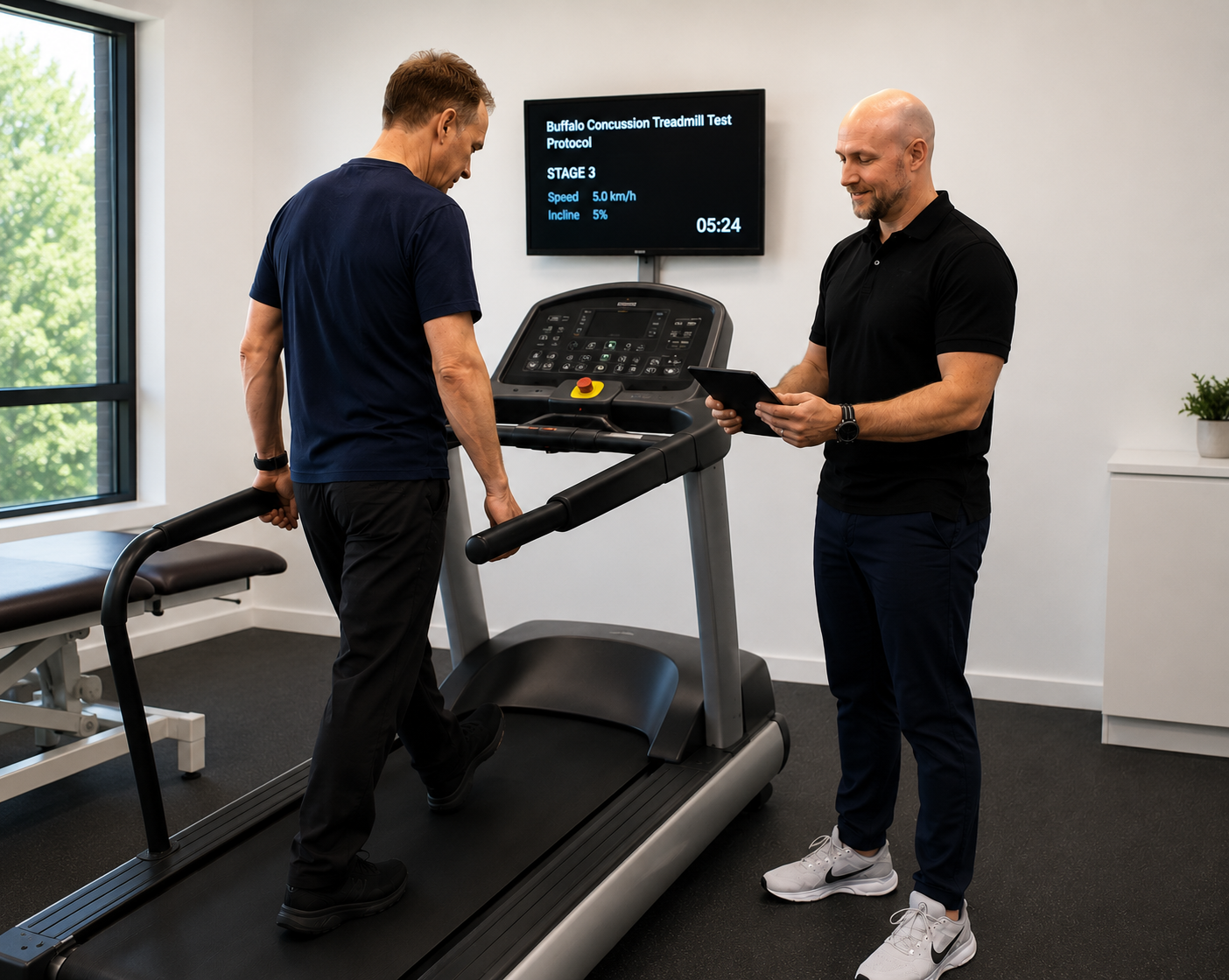
Modern concussion research has moved away from prolonged rest and towards an active rehabilitation approach. Following the initial recovery phase, the brain benefits from carefully prescribed activity, progressive exercise, symptom-guided exposure, and targeted rehabilitation strategies designed to support recovery across multiple systems.
Concussion can affect a number of interconnected systems including the brain, vestibular system (balance), vision, autonomic nervous system, cardiovascular system, sleep, and psychological wellbeing. This is why two people with seemingly similar injuries can have very different recovery experiences.
The RECOSYSTEM of Concussion Recovery
At Adaptiv Health, we view concussion through the lens of the RECOSYSTEM™.
Recovery is influenced not only by the injury itself but also by factors such as:
Physical activity and exercise tolerance
Sleep quality and recovery
Vestibular and balance function
Vision and sensory processing
Stress and life demands
Work, study, and sporting pressures
General health and physical conditioning
Confidence and fear of symptoms
Family, social support, and environment
Our role is to identify the factors influencing recovery and develop a structured pathway back to health, work, study, sport, and everyday life.
Working Alongside Your Medical Team
Concussion rehabilitation works best when healthcare professionals work together.
At Adaptiv Health, we will work closely with your GP, sports physician, neurologist, psychologist, school, employer, or other members of your healthcare team. This collaborative approach helps ensure that everyone is working towards the same goals and that rehabilitation remains coordinated, evidence-based, and tailored to your needs.
We believe the best outcomes occur when rehabilitation is integrated into a broader recovery plan, rather than delivered in isolation.
The Science Behind Recovery
Research shows that the brain remains highly adaptable following concussion. Carefully prescribed aerobic exercise can help regulate autonomic nervous system function, improve blood flow regulation, and reduce symptom burden. Targeted rehabilitation can help restore balance, coordination, confidence, and function while supporting the brain's natural recovery processes.
Recovery is not about pushing through symptoms. It is about finding the right balance between challenge and adaptation, allowing the brain and body to recover while gradually rebuilding capacity.
Our Concussion Rehabilitation Approach
Concussion rehabilitation at Adaptiv Health is led by Jarrod Collins, who has a particular interest in concussion management, neurological rehabilitation, cardiovascular rehabilitation, and exercise-based recovery.
Jarrod works with individuals experiencing both recent concussions and persistent post-concussion symptoms, helping them navigate the often confusing journey back to work, study, sport, and everyday activities. Through comprehensive assessment, education, exercise rehabilitation, and close collaboration with your medical team, he develops personalised recovery plans designed to restore function and confidence.
Whether you are an athlete, student, worker, or someone simply wanting to feel like yourself again, Jarrod provides dedicated support and guidance throughout the rehabilitation process.
We Commonly Help With
Sport-related concussion
Persistent post-concussion symptoms
Exercise intolerance following concussion
Headaches and dizziness
Balance and coordination difficulties
Return-to-work planning
Return-to-school planning
Return-to-sport progression
Fatigue and reduced physical capacity
Confidence and activity restoration
Our Philosophy
Understand the factors influencing your recovery.
Build physical capacity, confidence, and resilience.
Change through progressive adaptation and evidence-based rehabilitation.
Because concussion recovery is not simply about waiting for symptoms to disappear.
It's about creating the conditions that allow the brain and body to recover, adapt, and thrive.
Understand. Build. Change.
For concussion rehabilitation, Jarrod Collins provides dedicated assessment, rehabilitation, and recovery planning while working closely with your doctor and broader healthcare team to help you achieve the best possible outcome.
Complex Regional Pain Syndrome (CRPS)
Complex Regional Pain Syndrome (CRPS) is a complex neuroimmune condition that most commonly develops following an injury, fracture, surgery, or other trauma to a limb. While the original injury may heal, the body's protective systems can continue responding long after tissues would normally be expected to recover.
CRPS is characterised by persistent pain that appears disproportionate to the original injury, often accompanied by changes in sensation, movement, temperature, circulation, sweating, swelling, skin, hair, or nails. These symptoms are real and reflect changes occurring across multiple interacting body systems.
At Adaptiv Health, we understand that CRPS is far more than a problem of the affected hand, foot, arm, or leg. Contemporary research shows that CRPS involves interactions between the nervous system, immune system, autonomic nervous system, circulation, movement system, and the brain's protective networks. Rather than viewing CRPS as a condition of damaged tissues alone, we approach it as a condition of an overprotective NeuroImmune system.
To help explain this, we introduce patients to NIMMY- our NeuroImmune mascot. NIMMY represents the interconnected systems responsible for protection, healing, and recovery. Most of the time, NIMMY does an incredible job of keeping us safe. In CRPS, however, NIMMY can become stuck in a heightened protective state, producing pain, sensitivity, swelling, movement difficulties, and other symptoms long after the original injury has occurred.
The Science Behind CRPS
Research over the past two decades has transformed our understanding of CRPS.
Studies have demonstrated changes involving:
Nervous system sensitisation
Neuroimmune and inflammatory responses
Circulatory and vasomotor regulation
Stress and autonomic nervous system function
Movement and motor control systems
Body perception and sensory processing
Neural networks involved in protection and pain modulation
These changes do not mean the body is damaged beyond repair. Rather, they reflect an adaptive system that has become excessively protective.
Importantly, the same neuroplasticity that contributes to CRPS also provides opportunities for recovery.
Our Approach
At Adaptiv Health, rehabilitation is centred around helping the NeuroImmune system become less protective and more adaptable.
We combine contemporary pain science, neuroplasticity principles, movement rehabilitation, education, and psychologically informed care to support recovery.
Depending on individual needs, rehabilitation may include:
Pain and CRPS education
Graded movement and loading
Desensitisation strategies
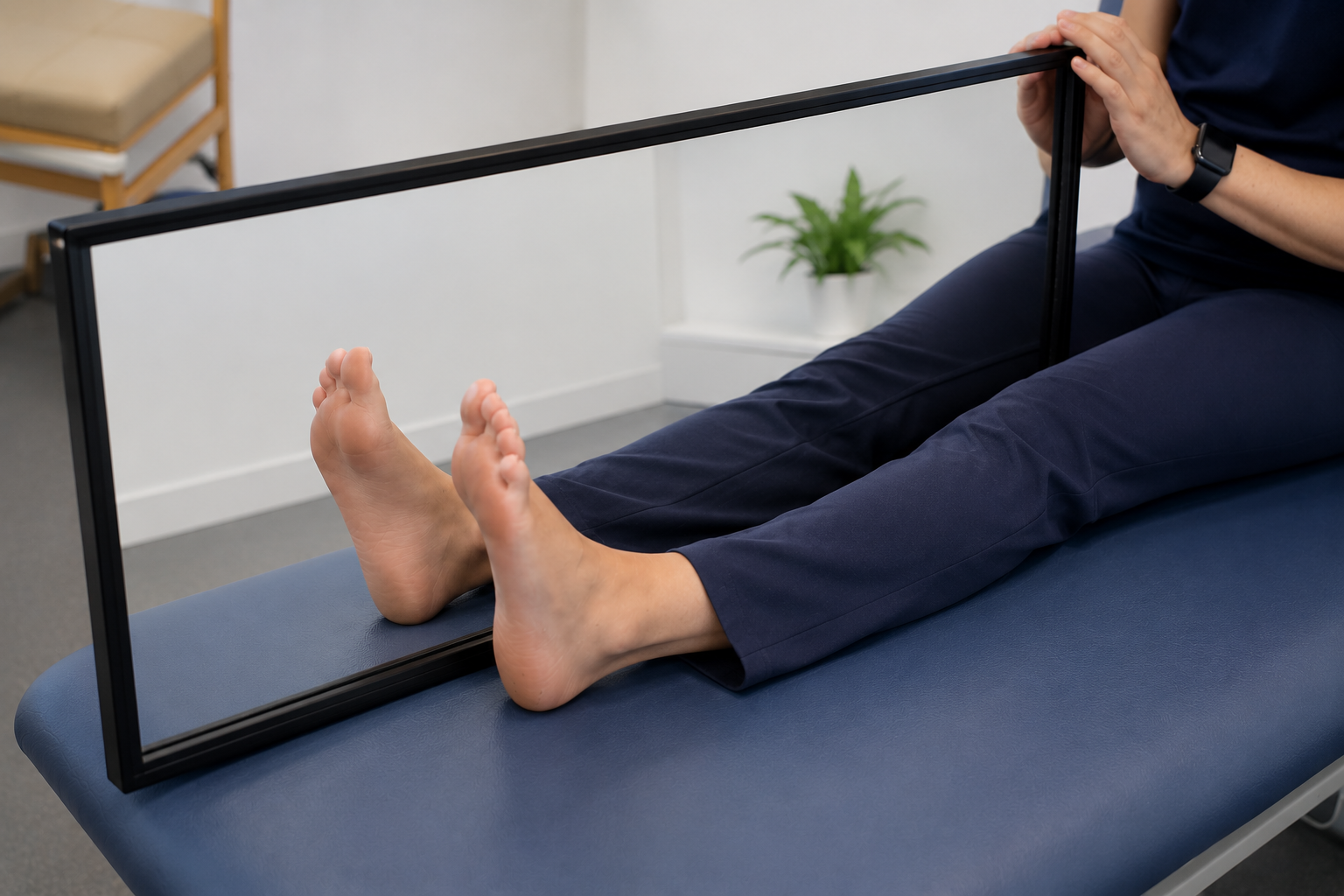
Mirror therapy
Graded Motor Imagery (GMI)
Sensory retraining
Functional rehabilitation
Exercise therapy
Pacing and flare management
Sleep and lifestyle optimisation
Confidence and self-efficacy building
Our goal is not simply to reduce symptoms. Our goal is to help people reconnect with movement, rebuild confidence, increase participation, and regain meaningful function.
Working Alongside Your Medical Team
CRPS often benefits from a coordinated multidisciplinary approach.
At Adaptiv Health, we will work with your GP, pain specialist, rehabilitation physician, neurologist, surgeon, psychologist, and other healthcare providers to ensure rehabilitation is integrated into your broader treatment plan.
We believe the best outcomes occur when patients, families, and healthcare professionals work together towards shared goals.
The RECOSYSTEM, Ecosystem of Recovery
Recovery from CRPS rarely depends on a single treatment.
It occurs within a broader Ecosystem of Recovery or RECOSYSTEM , the network of factors that influence healing, adaptation, and resilience.
This includes:
The nervous system
The immune system
Sleep and recovery
Stress and emotional wellbeing
Movement and physical activity
Family and social support
Work and daily function
Healthcare experiences
Confidence, purpose, and participation
By supporting the entire RECOSYSTEM, we help create the conditions that allow meaningful recovery to occur.
Our Philosophy
Understand what CRPS is and why symptoms occur.
Build confidence, movement, capacity, and resilience.
Change through adaptation, neuroplasticity, and evidence-based rehabilitation.
Because CRPS is not simply a condition of pain.
It is a condition of protection.
And protection can change.
Understand. Build. Change.
Because recovery is not easy, but it is possible.